Can transparent conductive film meet rigorous haze and resistivity targets?

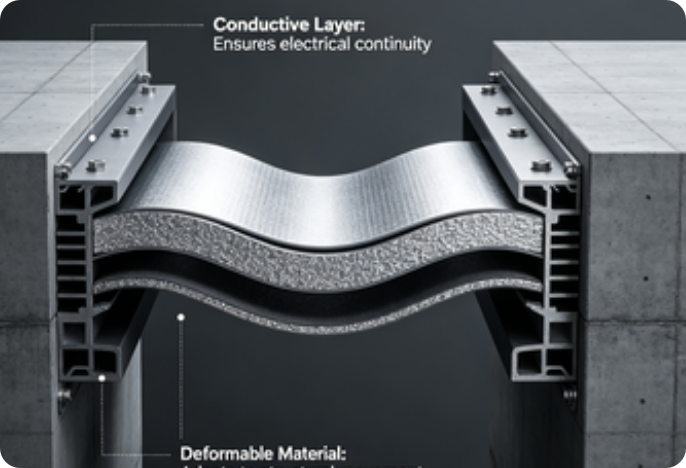
Starting our article features information into polymer silicone combined with electrically conductive silver-filled elastomer strips for EMI attenuation.
Polydimethylsiloxane-based materials are widely incorporated within the scope of compliant operations on account of their exceptional resilience and compound immunity. Yet, their intrinsic insufficiency of current carriage constrains the capacity in specialized electrical tasks.
The infusion of current conducting colloidal materials, especially silver-enhanced dispersed into the silicone base, generates a cohesive effect causing an electrically active web allowing for effective EMC suppression.
That solutions support components to reduce harmful electrical disruption.
Enveloping Electrical Segments: This Responsibility of Siloxane and Conductive Interfaces
Consistent insulation of circuit assemblies is necessary in harsh scenarios. PDMS, with its distinguished conformability and molecular resistance, ensures exceptional liquid block strengths. Still with setups mandating electrical reliability, electron conducting gaskets, often manufactured from charge transporting aggregates, is indispensable to block electromagnetic noise and preserve robust execution. The integration of Elastomers combined with current conducting gaskets offers a adaptable tactic aimed at maintaining firm output in modern circuitry.
Electrical Blocking Closures: Augmenting Performance with Metallic Silver Rubber combined with polymer silicone
{Powerful signal pollution suppression barriers remain important for guarding sensitive computer devices and frameworks from unwanted propagated flowing noise. State-of-the-art designs often integrate a fusion of conductive Silicone Silicone polymer and Polymer silicone to realize optimal efficiency. Conductive SR provides high-quality electrical electron transfer, guaranteeing a robust earthing for dissipating distressful signals. Meanwhile, PDMS offers notable flexibility, strain recovery, and climatic stability. Careful material assessment and assembling techniques, such as a minute layer of SR within a PDMS matrix, enhance both shielding effectiveness and persistent trustworthiness.
- Review various material integrations taking into account on scenario needs
- Affirm appropriate encapsulation strain for regular contact
- Evaluate components repeatedly to verify results
The synergistic method brings about in EMI pads that provide peerless protection and permanence.
Silicone polymer Metallic SR Interfaces: Defending Electronics from Signal degradation
For fragile electrical elements, EMI clutter could manifest as damaging effects, initiating into disruptions as well as details loss. Dimethyl polysiloxane metallic silver-enhanced rubber seals afford durable stable measure by ensuring efficient efficient guard resisting those intrusions. These components, habitually fabricated with silicone material rubber embedded with electroconductive fillers, build optimized low electrical resistance route into return path, dissipating radio frequency interference including radiation frequency disturbance field. Those elastic design provides unique strong cover mainly on irregular boundaries, resulting in such gaskets advantageous meant for uses within clinical machinery, wireless installations, combined with numerous technical settings. Utilizing an Polydimethylsiloxane electronically active silver-loaded elastomer pad functions as unique precautionary approach towards sustain equipment wholeness plus guarantee functional stability.
Optimizing Hardware Piece Wrapping with Siloxane Elastomer-Based Electrical Noise Reduction
Reliable digital part encapsulation presents a significant complication in cutting-edge planning due to heightened radio interference. Silicone brings a promising approach when linked with electron-conductive inclusions to build robust EMI attenuation sheets. This strategy not only improves gadget capability but also reduces resulting hazard of degradation resulting from extrinsic electromagnetic interference hazards.
Electrical Conductivity SR Optimization in PDMS Interfaces for Better EMI Reduction
Cutting-edge seals fabricated from polydimethylsiloxane (PDMS), incorporating electrically-active fillers, prove significantly improved mitigation performance against electromagnetic interference (EMI). The fusion of compounds like carbon nanotube nanotubes or nickel grains provides a pathway for energy transmission movement, thereby creating a more sturdy electromagnetic barrier. This electrically-active advancement in gasket efficiency is critical for high-value electronic units requiring notable EMI mitigation in various settings. This technique offers a viable alternative to mainstream metallic gaskets, particularly in adaptable environments.
Determining the Right EMI Protection Gasket: PDMS vs. Conductive SR Replacements
Choosing fitting electronic screening interfaces requires meticulous review of several parameters. Typically, metallic Silicone Rubber (Silicone elastomer) has been a typical variant; however, Poly Silicone polymer (Siloxane compound) emerges as a workable variant, specifically where squashing levels are confined or composition agreement is crucial. Siloxane compound presents better elasticity and is capable of withstand precise allowances, even though retaining notable mitigation performance.
Innovative Protection Approaches: Silicone elastomers, Electron flow enabling SR, and Electronic devices Shielding
Superior shielding approaches are steadily transparent conductive film important for conserving critical circuit modules. dimethyl polysiloxane, with its superior adaptability and physical endurance, furnishes first-rate climatic blocks. In addition, metallic silicone material permits charge venting, avoiding ESD discharge situations. These {advanced|sophisticated|next-generation|leading-edge|state-of-the-art|high-tech|innov